Step 1: Safety First. Stay Off the Roof
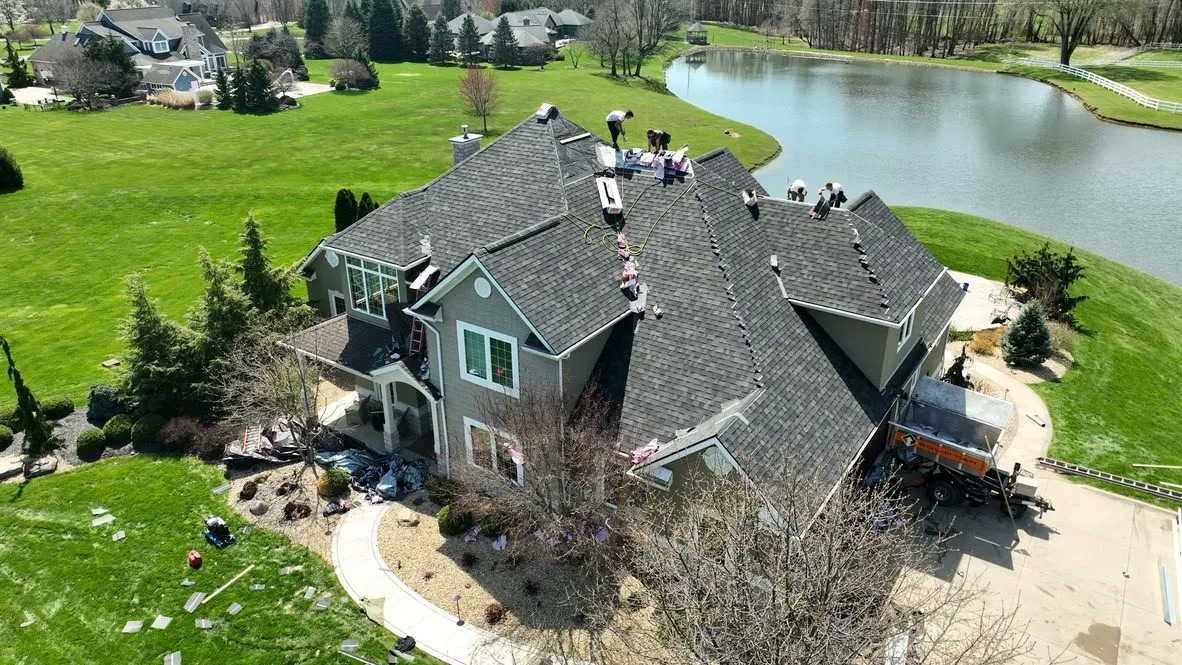
After a severe storm, your instinct is to check the damage. Resist the urge to climb up. A storm-damaged roof may have loose shingles, weakened decking, wet surfaces, and hidden structural compromise. Every year, homeowners are injured or killed falling from storm-damaged roofs.
Before you even step outside, check for these immediate hazards:
- Downed power lines. If a power line is on or near your home, stay inside and call 911 immediately. Do not touch anything the line is contacting. Electricity can travel through water, metal fences, and even the ground around the line.
- Ceiling bulges or sagging. A sagging ceiling means water is pooling above the drywall. It can collapse without warning. Place a bucket underneath and carefully puncture the center of the bulge with a screwdriver to release the water in a controlled way, but only if you can do so safely from a stable position.
- Water near electrical panels or outlets. If you see water flowing near electrical systems, shut off power at the main breaker if you can reach it safely. If you cannot, call your utility company for an emergency disconnect.
- Gas smell. If you smell natural gas, leave immediately and call your gas company from a safe distance. Storm debris can damage gas lines and vents.
Once immediate hazards are cleared, you can begin assessing damage from the ground. Never walk on a storm-damaged roof without professional equipment and fall protection.
Step 2: Document Everything. Your Insurance Depends on It
Your smartphone is your most important tool right now. Insurance adjusters rely heavily on documentation, and the evidence you capture in the first 24 hours is often more valuable than what a professional finds a week later.
Here is exactly what to photograph and save:
- Dented gutters and downspouts. Circular dents on metal gutters are the clearest proof of hail impact. Photograph them up close with a coin or ruler for scale. These dents confirm that your shingles took the same hits. Metal just shows it more obviously.
- Missing or displaced shingles. Use your phone zoom to capture shingle damage from the ground. Look at all four sides of your roof. Shingles blown off by wind damage often land in the yard. Photograph them where they fell.
- Damaged siding, window screens, and trim. Cracked siding panels, dented window frames, and torn screens all help establish the severity of the storm. The more collateral damage you document, the stronger your claim.
- Vehicle damage. If your car was outside during the storm and has hail dents, photograph them. Adjusters use vehicle damage as a proxy for roof impact severity.
- Interior water stains or leaks. Photograph any ceiling stains, wall discoloration, or active drips. Note the room location. This helps your contractor trace the leak source on the roof above.
- Save the weather report. Screenshot the National Weather Service storm report for your area. Note the date, time, and confirmed hail size. Insurance companies cross-reference this data when processing claims.
Pro Tip: Timestamp Matters
Your phone automatically timestamps photos. Take your damage photos as soon as possible after the storm. Ideally the same day. Photos taken weeks later carry less weight with adjusters because they cannot prove the damage was from the specific storm event.
Get Your Free Inspection
Most appointments available within 48 hours. No obligation.
100% Free | No Obligation | Same-Day Response
Step 3: Protect Your Home From Further Damage
Your insurance policy requires you to take "reasonable steps" to prevent additional damage after a covered event. This is not optional. Failure to mitigate can reduce your payout. The good news: your insurance covers the cost of these temporary measures.
- Active roof leak: Place buckets under drips, move furniture and valuables away from the leak area, and lay down towels or plastic sheeting to protect flooring.
- Tarping (if safe to do so): A standard blue tarp secured with 2x4 boards and roofing nails can protect an exposed area temporarily. Only attempt this on a single-story, low-pitch roof in dry conditions. For anything else, call a professional.
- Broken windows: Board up with plywood to prevent water intrusion and secure the home.
- Tree on roof: Do not attempt to remove it yourself. A fallen tree can be holding damaged sections together. Removing it without support can cause collapse. Call a professional tree service and your roofing contractor.
Save all receipts for tarps, boards, and any emergency supplies. These costs are reimbursable under your insurance claim. Our guide on how to file a roof insurance claim covers the full process. If you hire a contractor for emergency tarping, keep that invoice as well. It gets added to the claim total.
Step 4: Know When to Call. Urgency Guide
Not all storm damage is equally urgent. Here is how to prioritize:
Call NOW (Same Day)
- Active leak into your living space
- Tree or large branch on the roof
- Exposed decking or underlayment visible
- Structural sagging or collapse
- Water near electrical systems
Call Within 48 Hours
- Hail dents visible on gutters or metal surfaces
- Missing shingles (no active leak yet)
- Debris impact marks on roof or siding
- Cracked or dislodged ridge cap
- Neighbors are getting inspections
Schedule This Week
- Granule wash in gutters or at downspout splash
- Minor cosmetic damage to siding or trim
- Dented mailbox or outdoor fixtures (hail indicator)
- You heard significant hail but cannot see damage
When in doubt, call. A professional inspection takes 30 to 45 minutes and costs you nothing with Cornerstone. Not sure if your damage is covered? Our guide explains what Ohio insurance covers for hail damage. We would rather inspect a roof and find no damage than have a homeowner wait six months and discover their decking has been rotting.
Step 5: Avoid These Post-Storm Mistakes
In the days after a major storm, you will face pressure from all directions. Roofing salespeople at your door, phone calls from contractors you have never heard of, and the stress of dealing with your insurance company. Here are the mistakes that cost homeowners the most:
- Signing with a storm chaser. Out-of-state crews will canvass your neighborhood within hours of a storm. They offer free inspections, push for immediate signatures, and promise to "handle everything." Six months later, when a leak develops, they are three states away working the next storm. Always verify that your contractor has a permanent Ohio address, local references, and verifiable insurance.
- Making permanent repairs before the adjuster visits. Temporary protection (tarps, buckets) is expected and encouraged. But do not replace shingles, install new flashing, or make permanent fixes before your adjuster has inspected. Once the damage is repaired, the evidence is gone, and so is your leverage.
- Waiting months to file your claim. Ohio's weather does not stop after one storm. Every additional rain, freeze-thaw cycle, or wind event makes it harder to prove which storm caused which damage. File within the first week whenever possible.
- Accepting the first adjuster estimate without review. Insurance adjusters are working dozens of claims simultaneously after a storm. They miss things, not out of malice, but because they are under time pressure. Have your contractor review the adjuster's scope line by line. Items like ice and water shield, drip edge, pipe boots, and starter strip are frequently underpaid or omitted.
- Agreeing to a "deductible waiver." Any contractor who offers to waive your deductible is committing insurance fraud under Ohio law (ORC 3999.21). They inflate the claim to cover your deductible, which puts you at legal risk. Your deductible is your responsibility. An honest contractor will never suggest otherwise.
Step 6: The Insurance Claim Timeline
Here is what a typical storm damage claim looks like from start to finish in Northeast Ohio:
Get a Professional Inspection
Call a local roofing contractor for a free inspection. A qualified contractor will document every impact point with photos, measure the roof, and provide a detailed scope of work that matches insurance industry standards.
File Your Insurance Claim
Call your insurance carrier's claims line. Provide the storm date, your documentation photos, and your contractor's inspection report. You will receive a claim number and an estimated adjuster visit date.
Adjuster Inspection
Your insurance adjuster will visit to inspect the damage. Have your contractor on-site. They can walk the roof with the adjuster and ensure nothing is missed. This single step is the most important factor in getting a fair payout.
Approval and Scope Agreement
After the inspection, your carrier issues an estimate and initial payment (for RCV policies, this is the ACV check minus your deductible). Your contractor reviews the scope to make sure it covers everything needed for a proper repair.
Repairs Completed
Your contractor schedules and completes the work. Most residential roof replacements take one to two days once materials arrive. After completion, RCV policyholders receive their recoverable depreciation check. The final portion of the claim.
Start to finish, most storm damage claims in Northeast Ohio resolve in 30 to 60 days. Delays typically come from slow adjuster scheduling during busy storm seasons. which is another reason to file early and get in the queue.
Need Emergency Help? We Respond Same Day.
Active leak, tree on your roof, or storm damage you are not sure about. Call us. We provide emergency tarping, free damage inspections, and full insurance claim support across Summit, Wayne, Stark, and Medina counties. No obligation, no pressure.
Frequently Asked Questions
Should I tarp my own roof after a storm?
Only if it is safe to do so. Meaning a single-story roof with a low pitch and no active weather. If your roof is steep, multi-story, or if there are downed power lines nearby, do not go up. Call a roofing contractor for emergency tarping. Most insurance policies cover the cost of emergency mitigation, so you will not be paying out of pocket for professional tarping.
How fast should I file an insurance claim after storm damage?
File as soon as possible. Ideally within 48 to 72 hours of the storm. Most Ohio homeowners policies allow 1 to 2 years from the date of the storm, but waiting makes it harder to prove the damage was storm-related rather than pre-existing wear. Early filing also gets you in the adjuster queue faster, which matters during busy storm seasons when adjusters are booked weeks out.
Will my insurance pay for temporary repairs?
Yes. Most homeowners insurance policies require you to take reasonable steps to prevent further damage, and they cover those costs. Emergency tarping, board-up, and temporary leak containment are all covered under most dwelling policies. Save all receipts and document the temporary work with photos. These costs are typically added to your final claim.
What if the adjuster says there is no damage but my contractor disagrees?
This happens more often than you would think. You have the right to request a re-inspection with a different adjuster. Ask your contractor to provide a detailed written scope of work with photo documentation showing specific damage points. If the second adjuster still denies, you can invoke your policy's appraisal clause, which brings in an independent umpire to settle the dispute. Cornerstone has experience navigating disputed claims and can guide you through the process.