It's Already Started
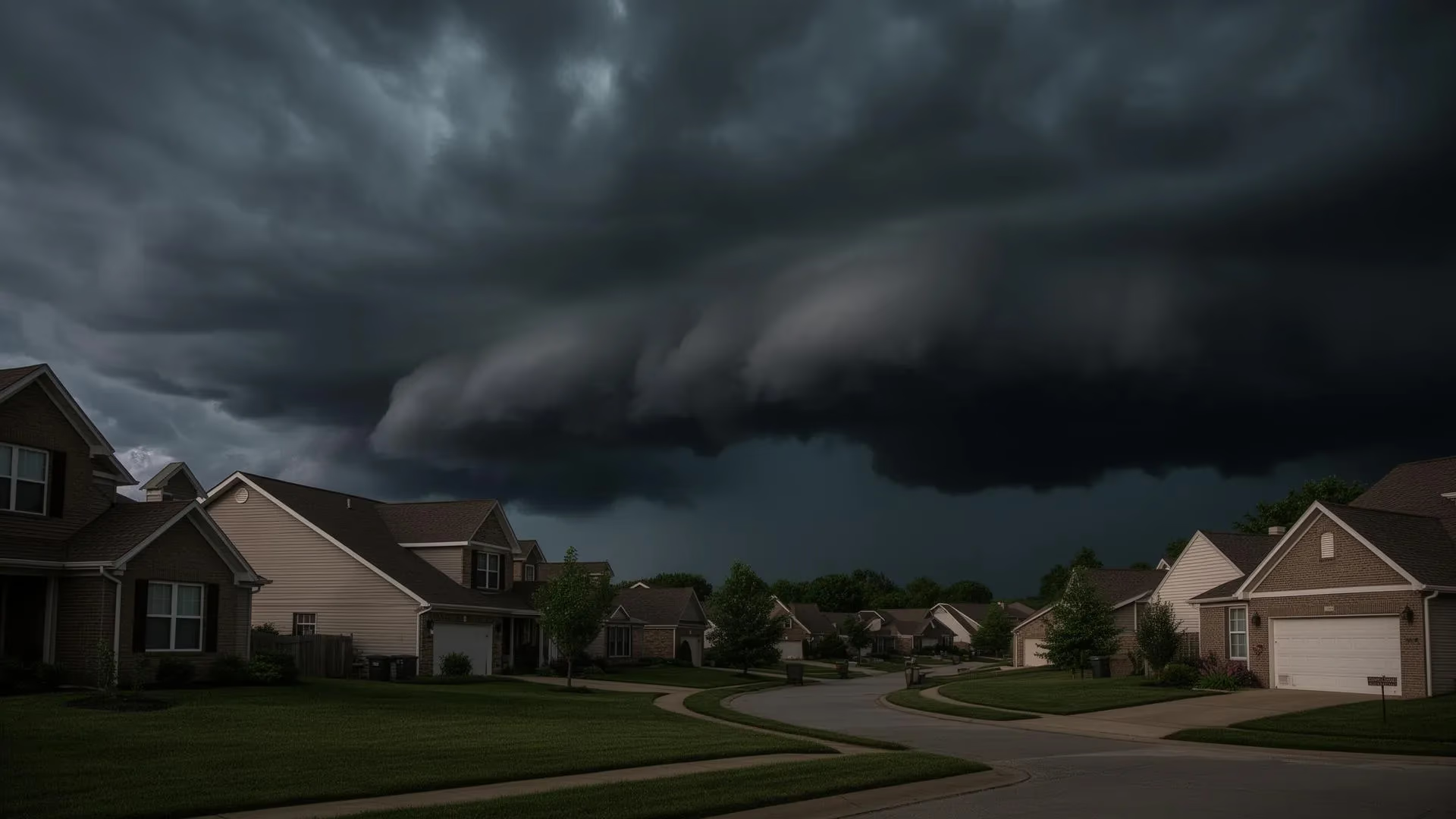
The National Weather Service has recorded multiple high wind advisories across Wayne, Summit, Stark, Tuscarawas, and Ashland counties in March 2026 alone. That's before tornado season, before the spring hail corridor activates, and well before the bulk of Northeast Ohio's severe weather window opens up.
Most homeowners don't realize wind damage becomes a structural concern at 50+ mph. and Northeast Ohio regularly sees gusts above that threshold. These aren't catastrophic events that make headlines. They're the kind of storms that pass through on a Tuesday evening and leave your neighbors' shingles intact while loosening the flashing on yours.
The problem: damage from these events often isn't visible from the ground. You won't see it. You won't feel it. You'll find out about it when the leak starts. Sometimes months later. If a storm has already hit your area, follow our step-by-step guide on what to do after storm damage to your roof.
What Storm Damage Actually Looks Like
Wind and hail damage rarely announces itself. There's no obvious hole, no missing section of roof. What's actually happening is more subtle, and more damaging long term.
- Lifted shingles. Edges pull away from the roof deck, breaking the seal and allowing water infiltration
- Cracked sealant strips. The adhesive that bonds shingles fails under repeated wind stress
- Loosened flashing. Metal flashing around chimneys, vents, and valleys separates from the roof
- Granule loss. Protective granules wash into gutters, accelerating shingle aging
- Bruised shingles. Hail impact creates soft spots invisible from the ground but readable on inspection
You don't need a visible leak to have a real problem
Storm damage that goes unrepaired doesn't stay contained. It accelerates aging, voids manufacturer warranties, and gives insurers grounds to attribute future damage to "wear and tear" rather than the storm that caused it. The time to catch this is now, not after the next event.
Schedule Free Inspection
Most appointments available within 48 hours. No obligation.
100% Free | No Obligation | Same-Day Response
The Spring Storm Season Forecast
Ohio typically sees its worst severe weather from April through July. Historical patterns put the Great Lakes corridor in a high-activity zone for thunderstorms, straight-line winds, and hail during this window, and 2026 is shaping up to follow suit.
La Niña patterns present in early 2026 are associated with above-average severe thunderstorm activity across the Midwest and Great Lakes region. Forecasters and historical records both suggest Northeast Ohio should expect an active spring.
The three biggest threats to residential roofs in this region:
Hail
Quarter-size (1") hail or larger causes direct shingle damage. Even penny-size hail causes granule loss that shortens roof life significantly.
Straight-line winds
Common with fast-moving thunderstorm lines. Wind damage doesn't require a tornado. Sustained gusts above 50 mph are enough to compromise shingles and flashing.
Microbursts
Localized downdrafts that can hit 100+ mph with no warning. These concentrate damage in a small geographic area. Your neighbor's house might be fine while yours takes a direct hit.
Why You Should Get Inspected NOW. Before Storm Season
Getting a roof inspection before the busy season isn't just smart. It's the difference between a covered insurance claim and an out-of-pocket repair. Three reasons to act now:
Insurance claims have time limits
Most Ohio homeowner policies require you to file within 1-2 years of the storm date. Miss that window and you've forfeited a legitimate claim. The clock started when the wind advisory hit, not when you noticed the problem.
Existing damage + new storm = denied claim
Insurers look for pre-existing damage. If you have unrepaired damage from March's wind events and a hailstorm hits in May, the insurer may attribute everything to prior wear and tear. Document now. Before the next event layers on top.
Contractors get slammed after major storms
After a significant storm event in Northeast Ohio, wait times for reputable contractors stretch to weeks. Sometimes longer. Getting on the schedule now means you're protected before the backlog builds, and you're working with a contractor who isn't rushing through 50 jobs at once.
What a Free Storm Inspection Includes
Our inspection covers every element that storm events can compromise. Documented with photos you can use for an insurance claim:
Full Roof Walkup
We go up on the roof, not just binoculars from the driveway. Every section assessed.
Flashing & Vent Check
Chimney, pipe boots, ridge vents, and valleys. The places water exploits first.
Gutter Assessment
Granule accumulation, attachment points, and downspout condition all documented.
Attic Ventilation Check
Improper ventilation accelerates storm damage and voids warranties. We check it.
Drone Documentation
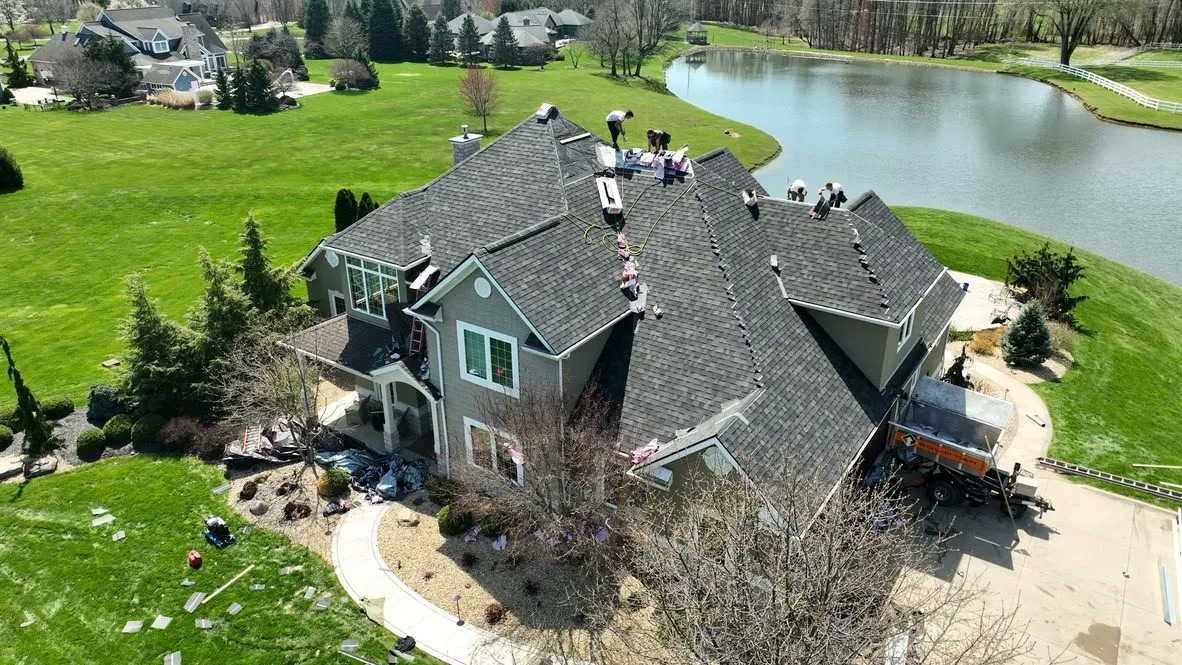
High-resolution aerial photos capture damage evidence that supports your claim.
Written Report with Photos
You leave with a documented assessment, not just a verbal opinion.
Your Roof, Your Call
If you're in Wayne, Summit, Stark, Medina, or any of our service areas across Northeast Ohio, we'll come out, inspect your roof for free, and give you an honest assessment of what we find. No pressure. No obligation. If there's nothing to report, we'll tell you that.
If there is damage. Especially damage tied to a storm event. We document it and guide you through the claim from start to finish. Visit our storm damage repair page for details on our process. Documentation, adjuster coordination, scope review, the whole process. We've done it hundreds of times for Northeast Ohio homeowners and we know how to get claims approved.
Not Sure If Your Roof Has Storm Damage?
We offer free inspections with full photo documentation. If there's damage worth claiming, we walk you through the entire insurance process at no extra cost.
Related reading: Does Insurance Cover Hail Damage in Ohio? · What to Do After Storm Damage to Your Roof
Our services: Storm Damage Repair · Hail Damage · Wind Damage · Insurance Claim Help