Why Northeast Ohio Gets Hit Hard
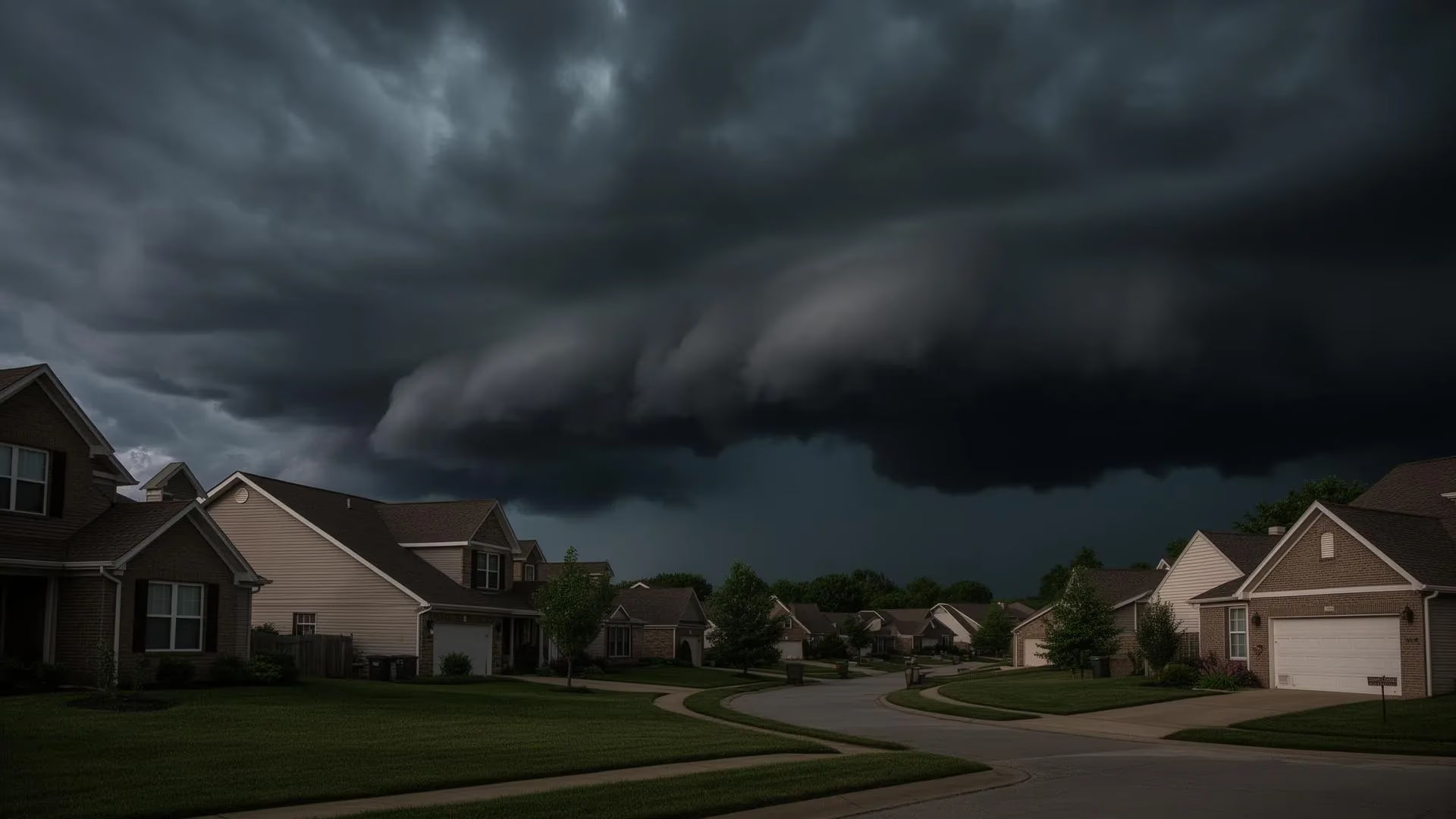
Ohio sits squarely in what meteorologists call the "Midwest Hail Alley". A corridor stretching from the Great Plains through the Great Lakes region where cold Canadian air masses routinely collide with warm, moisture-laden air flowing north from the Gulf of Mexico. That clash produces the violent updrafts that form hailstones.
Every spring, the atmosphere over Northeast Ohio becomes a battleground. Lake Erie adds additional moisture to the mix, intensifying storm cells that might otherwise weaken before reaching us. The result: Summit, Wayne, Stark, and Medina counties average three to five significant hail events per year, with most of them concentrated between April and June.
A "significant" hail event means stones at or above 3/4 inch in diameter. The threshold at which asphalt shingles begin to sustain damage. In peak years, some areas of Northeast Ohio see multiple quarter-sized or larger hail events in a single spring season.
The challenge for homeowners is that hail damage is not always visible from the ground. Damage can hide in plain sight for months, allowing water to infiltrate your decking before you ever notice a stain on your ceiling. For the latest weather outlook and what it means for your property, see our 2026 Ohio storm season forecast. Knowing the signs, and acting quickly. Is what separates a manageable roof insurance claim from a costly structural repair.
What Hail Damage Actually Looks Like
After a hailstorm, your roof does not look like it was hit by cannonballs. The damage is subtler, and that subtlety is exactly why so many homeowners miss it. Here is what professional inspectors look for:
- Granule loss (dark spots on shingles). Asphalt shingles are coated in granules that protect the asphalt layer from UV and weathering. Hail knocks granules off, leaving dark, bare patches. These spots are often easier to spot in your gutters and downspout splash areas. Look for heavy granule accumulation after a storm.
- Bruising (soft spots you feel, not always see). A bruised shingle feels spongy or soft when pressed, similar to a bruise on fruit. The asphalt mat beneath the granules has been compromised. This type of damage is invisible from the street and requires a hands-on inspection.
- Cracked or fractured shingles. Larger hailstones (1 inch and above) can fracture shingles outright. These cracks allow water to reach the underlayment and decking immediately. Even a single cracked shingle can lead to a leak within one or two rain cycles.
- Dented metal components (gutters, flashing, ridge vents). Metal surfaces show hail impacts clearly as circular dents. If your gutters, downspouts, aluminum flashing, or HVAC caps have fresh dents, your shingles almost certainly took hits too. Metal just shows it more obviously.
- Damaged or dislodged ridge cap shingles. The ridge cap takes some of the hardest hits because it sits exposed at the peak of the roof. Missing or cracked ridge cap shingles are a reliable indicator of significant storm impact across the whole roof surface.
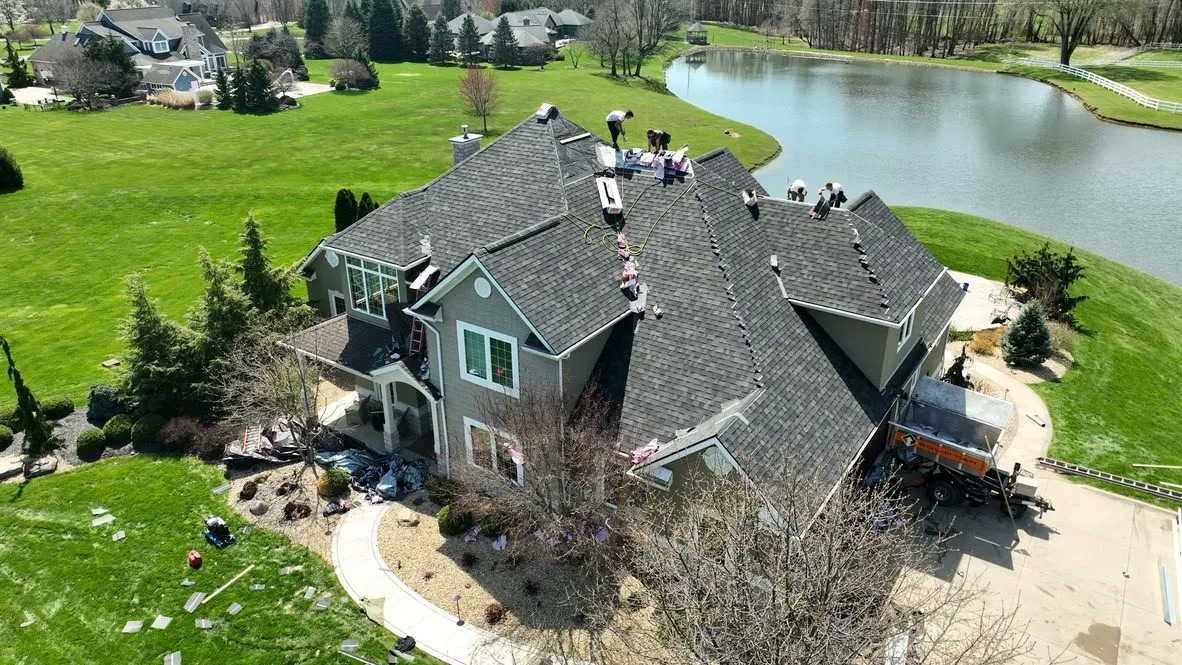
From the ground, you may be able to spot obvious dents on gutters or missing granule patches on south-facing slopes. However, the only way to accurately assess storm damage is a physical inspection by a trained roofing professional. Cornerstone offers free hail damage inspections with no obligation. We document everything with photos whether you file a claim or not.
Get Your Free Inspection
Most appointments available within 48 hours. No obligation.
100% Free | No Obligation | Same-Day Response
When to Inspect Your Roof
The answer is straightforward: as soon as possible after any storm that drops hail at or above 3/4 inch. You do not need to wait for a leak. You do not need to wait for visible damage from the street. The moment you know a significant storm passed through your area, request an inspection.
Here is a quick self-check you can do from the ground within an hour of a storm passing:
- Walk around your home and look at your gutters and downspouts for fresh dents. Quarter-sized circular dents are a clear indicator.
- Check the downspout splash areas on the ground. A large volume of dark granules pooling after a storm means your shingles lost significant protective coating.
- Look at any painted wood trim, window screens, or AC condenser fins. Fresh dings on soft metals and screens confirm hail contact.
- Check your vehicle if it was outside. Paint damage on a car hood is a reliable proxy for what happened to your roof.
Do Not Wait. Damage Accelerates
Bruised and granule-depleted shingles degrade exponentially faster than intact shingles. A roof that loses 30% of its protective granules in a hailstorm may reach the end of its useful life in two to three years instead of ten. More critically, Ohio's freeze-thaw cycles will exploit any crack or soft spot over winter, turning a manageable insurance claim into a rotted decking replacement. The longer you wait, the harder it becomes to prove storm causation to your insurance carrier.
The Hail Size Chart
Insurance adjusters and roofing professionals reference hail size using everyday coin comparisons. Here is the scale that matters for your roof:
Insurance companies look at National Weather Service storm data to verify hail size in your area on the date of impact. If quarter-sized or larger hail is confirmed in your zip code, your adjuster will almost always approve a full inspection. Your Cornerstone inspector can help you document the evidence that supports your claim.
What Your Insurance Will Pay
Most Ohio homeowners insurance policies cover hail damage under the dwelling coverage portion of your policy. Our detailed guide explains exactly what Ohio insurance covers for hail damage. If your policy is written on a Replacement Cost Value (RCV) basis, which most standard policies are. Your carrier will pay the full cost to replace your roof with materials of like kind and quality, minus your deductible. You do not absorb depreciation.
Some older or budget policies are written on an Actual Cash Value (ACV) basis, which factors in depreciation. On a 15-year-old roof, this can mean you receive considerably less than the replacement cost. Review your declarations page or call your agent to confirm which basis your policy uses.
The most important thing to understand about hail claims in Ohio: you typically have one to two years from the date of the storm to file. Every carrier is different, and policy language governs, so do not assume. If you missed a storm last spring but have not had your roof inspected, do it now. We regularly find damage from storms that occurred 12 to 18 months prior that is still claimable.
Cornerstone works directly with insurance adjusters. We document every impact point with photographs, provide a detailed scope of work that matches insurance industry line items, and are on-site during adjuster visits when our customers want us there. Our goal is to make sure your claim is complete and accurate, not inflated, not undervalued.
Red Flags to Watch For After a Storm
A significant hailstorm in Northeast Ohio reliably brings two things: legitimate damage and out-of-town contractors looking to exploit it. Here is what to watch for and avoid:
- Storm chasers knocking on your door. Out-of-state trucks rolling through your neighborhood within 48 hours of a hailstorm are a warning sign, not a convenience. These contractors follow storm tracks across the country, perform quick repairs, collect insurance payments, and move on. When problems emerge six months later, they are long gone.
- "We'll waive your deductible" offers. This is not a discount. It is insurance fraud under Ohio law (ORC 3999.21). A contractor who offers to cover your deductible is inflating the claim to your carrier to make up the difference. If discovered, your claim can be denied and you may face legal liability. Never agree to this arrangement.
- High-pressure, same-day estimates. Any contractor who tells you the deal expires today is using sales pressure to bypass your due diligence. A trustworthy roofer will give you a written estimate and let you take time to review it, compare bids, and consult your insurance carrier.
- Signing an Assignment of Benefits (AOB) without reading it. An AOB transfers your insurance rights to the contractor. Once signed, you lose control of the claim. Reputable contractors do not need you to sign away your rights to do their job.
Cornerstone Roofing and Siding is based in Wooster, Ohio. We have been here before the storm and we will be here after the repairs are done. We do not knock on doors, we do not waive deductibles, and we do not use high-pressure tactics. If you want a second opinion on any estimate you have received, call us.
Not Sure If Your Roof Has Hail Damage?
We inspect roofs across Summit, Wayne, Stark, and Medina counties at no charge. No obligation, no pressure. Just an honest assessment with photos. If there is damage worth claiming, we will show you the evidence and walk you through the process.
Frequently Asked Questions
What size hail causes roof damage?
Hail at 3/4 inch (penny size) or larger can cause granule loss on asphalt shingles. Hail at 1 inch (quarter size) causes visible cracking, bruising, and denting of metal components. Any storm with confirmed hail at or above 3/4 inch warrants a professional roof inspection.
How long after a hailstorm can I file an insurance claim in Ohio?
Most Ohio homeowners insurance policies allow 1 to 2 years from the date of the storm to file a hail damage claim, but this varies by carrier and policy. Do not wait. Damage worsens over time, and documentation becomes harder the longer you delay. File as soon as possible after the storm.
Are hail damage roof claims common in Northeast Ohio?
Yes. Summit, Wayne, Stark, and Medina counties average 3 to 5 significant hail events per year. Northeast Ohio sits in the overlap zone between warm Gulf moisture and cold Canadian air masses, making spring and early summer hail events frequent and often severe.
How do I find a trustworthy roofer after a hailstorm?
Look for a locally established contractor with verifiable Ohio references, confirmed insurance, and a manufacturer certification such as Owens Corning Platinum Preferred. Avoid any contractor who knocks on your door unsolicited after a storm, offers to waive your deductible, or pressures you into signing the same day. Cornerstone Roofing and Siding offers free, no-pressure inspections at (330) 227-8829.