By Camen James, Owner. Wayne County, OH
The Short Answer
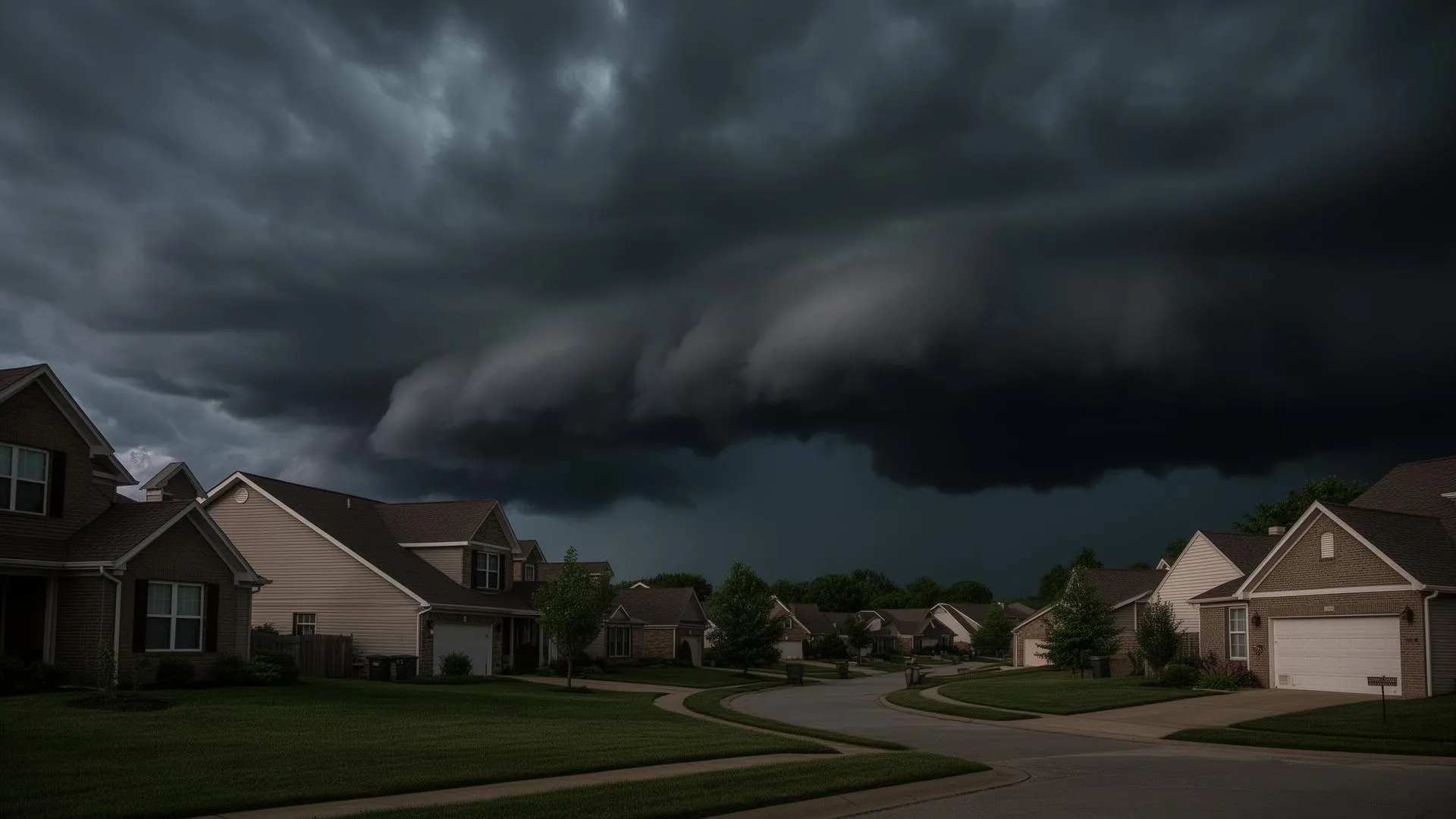
Wayne County, Ohio is part of a broader Northeast Ohio corridor that meteorologists informally call hail alley. A stretch of the eastern Midwest where spring and summer thunderstorms regularly produce damaging hail. Homeowners in Wooster, Orrville, Apple Creek, Rittman, and Smithville should expect roughly one to two significant hail events (quarter-size or larger) every year, with smaller hail far more common.
Why it matters: most asphalt shingle roofs in Wayne County have already taken at least one hail hit in the last five years. Damage often is not visible from the ground, but it shortens roof life and is usually covered by insurance. If you document and file in time. After every notable storm, we recommend a free roof inspection. There is no cost, no pressure, and no obligation either way.
- Hail of 1.0 inch (quarter-size) or larger is the threshold for likely roof damage
- Ohio insurance policies typically allow one year to file from the date of loss
- The first 30 days after a storm is the easiest window to file a clean claim
- A free inspection takes about 45 minutes and produces a written report
Hail Frequency in Wayne County
NOAA's Storm Events Database is the authoritative source for hail history in the United States. Pulling Wayne County records for the last decade shows a consistent pattern: small hail almost every spring and summer, with one or two larger events each year that meet the threshold for roof damage.
Hail size is measured by the largest stone observed during a storm, not the average. Here's how the sizes translate to roof risk:
| Hail size | Comparison | Damage risk | Recommended action |
|---|---|---|---|
| 0.75 inch | Penny | Possible bruising | Inspection recommended |
| 1.00 inch | Quarter | High damage risk | Inspect within 30 days |
| 1.25 inch | Half dollar | Significant damage likely | Inspect within 14 days |
| 1.50 inch | Walnut | Major damage almost certain | Inspect immediately |
| 1.75 inch | Golf ball | Catastrophic damage possible | Inspect and file claim |
| 2.00 inch+ | Hen egg / baseball | Total replacement scenario | Emergency inspection |
If you remember hail loud enough to wake you up, hitting windows or skylights for five minutes or longer, that storm is worth an inspection. Regardless of what your roof looks like from the ground. For deeper context on what gets covered, read our guide on does insurance cover hail damage in Ohio.
Schedule Free Inspection
Most appointments available within 48 hours. No obligation.
100% Free | No Obligation | Same-Day Response
Notable Wayne County Storms
A handful of recent events shaped the current insurance landscape for Wayne County homeowners. These are the storms that adjusters and contractors still reference when scoping damage:
- Summer 2022 Northeast Ohio derecho. Straight-line winds in excess of 70 mph swept across the region, including parts of Wayne County. While primarily a wind event, embedded hail cores produced scattered roof damage from Wooster through Orrville.
- Spring 2023 supercell cluster. Multiple rounds of severe thunderstorms in April and May produced quarter to half-dollar hail across the southern half of the county, with Apple Creek and Kidron receiving multiple impacts.
- 2024 spring season. A high-frequency spring with several tornado-warned storms tracking through Orrville and northern Wayne County. Numerous insurance claims were filed and approved across 44667 and 44691.
- 2025 summer storm cycle. Two notable hail events crossed the county in June and July, including golf-ball-size hail reports near Marshallville. Many roofs damaged in this cycle still have time to file before the one-year window closes.
For a forward-looking view of the current season, see our 2026 Ohio storm season forecast.
Why Wayne County Is Vulnerable
Three factors stack the deck for hail in Wayne County:
- Geography. Wayne County sits on the western edge of the Allegheny Plateau, where warm, moist air rising off Lake Erie collides with cooler continental air sweeping in from the west. That collision zone fuels strong updrafts, and strong updrafts are what produce large hail.
- Storm tracks. The Killbuck Valley channels storms from southwest to northeast, funneling severe thunderstorms through Apple Creek, Wooster, and Orrville on a regular basis throughout spring and summer.
- Seasonal timing. The window from late April through early August is when Ohio's atmosphere is most unstable. These months produce the overwhelming majority of damaging hail events for Northeast Ohio.
ZIP-code exposure snapshot
| ZIP | City | Risk | Notes |
|---|---|---|---|
| 44691 | Wooster | High | Mixed spring hail and summer derecho wind exposure |
| 44667 | Orrville | High | Heavy spring exposure; tornado-warned storms common |
| 44606 | Apple Creek | Very high | First-impact zone for Killbuck Valley storms |
| 44666 | Marshallville | Medium-high | Mid-county exposure |
| 44676 | Shreve | Medium | Southern county, sometimes shielded by terrain |
| 44627 | Fredericksburg | Medium | Mid-county storm corridor |
What Homeowners Should Do After Hail
The morning after a notable storm, you don't need to climb anywhere. Run through this short checklist instead. It takes about ten minutes and tells you whether to schedule an inspection:
- Walk your driveway and look at car hoods, painted patio furniture, mailboxes, and aluminum siding for hail dings
- Check window screens for tears or holes
- Look at gutters and downspouts for piles of shingle granules (they look like coarse black sand)
- Take photos of any visible damage with a timestamp
- Note the exact date and approximate time of the storm
- Talk to a neighbor. If their roof was hit, yours likely was too
If any of those signs are present, the next step is a professional inspection. We offer a free, no-pressure storm damage inspection that includes drone photography, attic check, gutter check, and a written report. If there is no damage, we tell you so in writing. Useful for your records and for any future claim. If there is damage, we walk you through exactly how to file the claim.
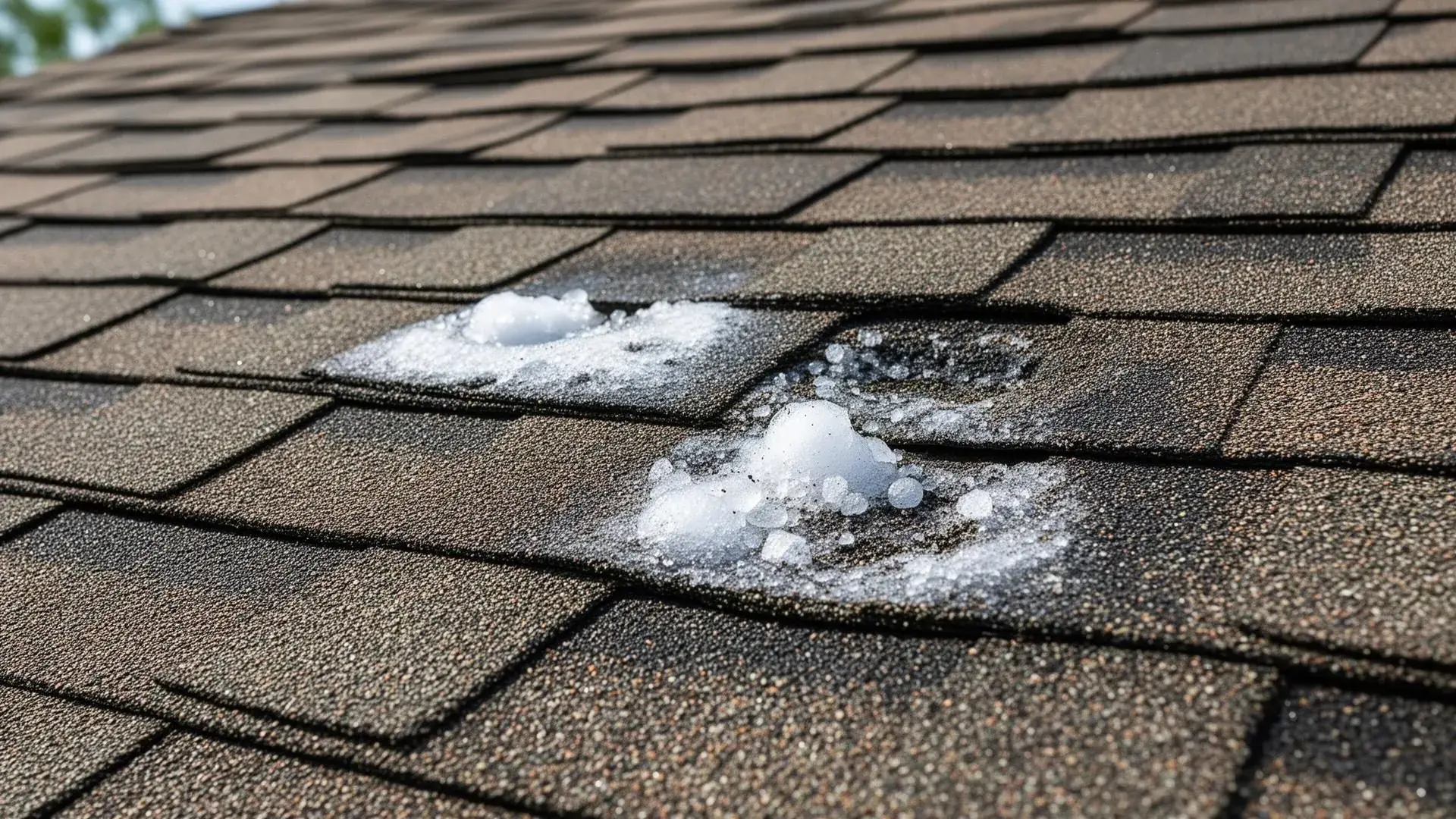
For background on what hail damage actually looks like on a roof, see our guide to identifying hail damage on asphalt shingles.
Frequently Asked Questions
How often does Wayne County, Ohio get damaging hail?
Wayne County averages 1 to 2 significant hail events per year (quarter-size or larger), with peak frequency between April and August. Smaller hail (pea to dime size) is much more common. Most properties see several such events each year. Roofing-grade damage typically requires hail of at least 1.0 inch in diameter.
What hail size actually damages an asphalt shingle roof?
Quarter-size hail (1.0 inch) is the industry threshold where insurance adjusters start expecting functional damage. Half-dollar hail (1.25 inch) almost always bruises shingles and shortens roof life. Golf-ball-size hail (1.75 inch) and above frequently triggers full replacement claims in Wayne County.
Which Wayne County areas get hit hardest by hail?
Based on historical NOAA storm data, the southern and southwestern parts of Wayne County. Apple Creek, Kidron, Mt. Eaton, and the Killbuck Valley. Are often first-impact zones for storms tracking northeast. Wooster and Orrville also see frequent activity in spring and summer. Any single storm can deviate from these patterns.
How long do I have to file a hail damage claim in Ohio?
Most Ohio homeowners' policies have a one-year contractual limitations period from the date of loss. Practically, you should file within 30 to 90 days while evidence is fresh. After a year, carriers commonly argue the damage is from age rather than a specific storm.
Can hail damage a roof without me being able to see it from the ground?
Yes. Frequently. Functional hail damage shows up as small dark bruises where the shingle granules have been knocked off. From the ground these are nearly invisible, but they expose the asphalt mat to UV and shorten the roof's life by years. A trained inspector finds them in minutes.
Should I get an inspection if my neighbor's roof was approved for replacement?
Absolutely. Hail rarely damages one house and skips the next. If a property within a few blocks of yours had an approved insurance claim from a recent storm, your roof was almost certainly hit too. Schedule a free inspection. There is no cost and no obligation.
What's the difference between a hail storm and a derecho in Ohio?
A hail storm produces ice stones from a thunderstorm updraft and damages roofs through impact. A derecho is a long, fast-moving line of straight-line wind storms that can produce 70+ mph gusts across hundreds of miles. Wayne County has seen both. The most notable recent derecho hit Northeast Ohio in summer 2022.
Storm Rolled Through? Get a Free Inspection.
We are headquartered in Wooster and have inspected thousands of Wayne County roofs. No pressure, no sales pitch. Just an honest look at whether your roof was hit and what to do about it.
Related reading: 2026 Ohio Storm Season Forecast · Does Insurance Cover Hail Damage in Ohio?
Our services: Wooster Roofing · Storm Damage Repair · Hail Damage Inspection