Quick Answer
To choose the best roofing contractor in Ohio, verify their local contractor registration and current insurance, read all of their Google reviews, confirm manufacturer certifications like Owens Corning Preferred, and get a written, itemized estimate before signing. Walk away from anyone who offers to waive your deductible, demands cash, or pressures you with "today only" pricing. Start with our roofing services and, after a storm, our storm damage team.
Why This Decision Is So Important
Your roof is not a commodity purchase. It is the single most critical barrier between your home's interior and Ohio's weather. For Akron homeowners specifically, see our guide to the best roofing contractor in Akron. For all of Ohio. Ice storms in January, hailstorms in May, driving rain from Lake Erie squalls in October. A quality roof installed by a skilled crew protects your home for 25 to 30 years. A poor installation on that same roof can fail in three to five.
The stakes extend beyond the roof itself. A bad contractor can void your manufacturer's shingle warranty through improper installation. Nail placement, ventilation, ice-and-water shield application. They can leave moisture trapped under flashing that slowly rots your decking and fascia. They can disappear after collecting payment, leaving you with no recourse for defects that appear months later.
Ohio homeowners lose tens of thousands of dollars every year to contractors who lacked the insurance, skills, or integrity to deliver on their promises. This is not a scare tactic. The Ohio Attorney General's office receives more complaints about residential roofing and home improvement contractors than almost any other category of service provider.
The good news: visit our roofing services page to see how we stack up against these criteria. A basic eight-point screening process catches the vast majority of bad actors before you sign anything. Use this checklist every time, regardless of how professional someone appears or how many times a neighbor recommends them.
The 8-Point Checklist
Ohio does not issue a single statewide roofing license, but most counties and municipalities require a local home improvement contractor registration. Ask for their registration number and the jurisdiction it covers. Verify it with your county building department before any work begins. A contractor who cannot produce this information is operating outside the rules, and outside any regulatory protection you might otherwise have.
Request certificates of insurance for general liability coverage (minimum $1 million per occurrence) and workers' compensation covering all workers on your project. Do not accept verbal confirmation. Call the insurance carrier listed on the certificate to verify the policy is active. If anyone is injured on your property and the contractor's coverage has lapsed, your homeowners policy, and potentially your personal assets. May be on the hook.
A 4.9-star average from 148 reviews tells a very different story than a 4.9-star average from 12 reviews. Volume matters because it is hard to fake. More importantly, read the actual review text. Do customers mention how problems were handled? Do they describe the crew's behavior on-site? Are there patterns in the complaints? A single bad review is noise. Three reviews mentioning the same issue is a pattern.
The three major shingle manufacturers all offer contractor certification programs: Owens Corning Preferred Contractor, GAF Master Elite, and CertainTeed SELECT ShingleMaster. These are not marketing badges. They require documented training, installation audits, and maintained insurance. Certified contractors can extend the manufacturer's warranty on both materials and workmanship. Ask if the contractor holds a current designation and verify it directly on the manufacturer's website using their contractor locator.
A professional estimate should include the specific shingle product and color, the underlayment specification, ice-and- water shield extent, ventilation plan, flashing materials, and any decking replacement terms. It should state clearly what is included and what is not. A one-page quote with a single dollar amount is not an estimate. It is a blank check for scope changes later. Compare estimates line by line, not just total price.
Your shingles carry a manufacturer's warranty against defective materials. Your contractor's workmanship warranty covers the quality of the installation. These are entirely separate documents. A manufacturer's warranty does nothing for you if a leak results from improper flashing. That is a workmanship issue. Ask specifically: how long is the workmanship warranty, what does it cover, and is it in writing in the contract? One year is minimum. Two to five years is reasonable from a confident contractor.
Many roofing companies act as general contractors who hand your job to a subcontracted crew that changes with every project. This is not inherently wrong, but you should know it upfront. An in-house crew works under the contractor's direct supervision daily, is trained to company standards, and builds institutional knowledge about installation quality. Subcontractors can be excellent. Ask if they are the same crews the company uses consistently, or if labor is hired project by project.
A deposit is reasonable to hold your place on the schedule and order materials. Ten percent is a fair and standard amount. Any contractor requesting 30%, 50%, or full payment before a single shingle is removed is a serious red flag. Structure your payment schedule around project milestones: deposit at signing, partial payment at material delivery, final payment upon documented completion and your sign-off. Keep the final payment substantial enough to matter.
Get Your Free Inspection
Most appointments available within 48 hours. No obligation.
100% Free | No Obligation | Same-Day Response
Red Flags to Run From
No matter how polished the pitch, walk away the moment you see any of these:
- Out-of-state trucks showing up within days of a storm. Storm-chasing contractors follow storm damage events across the country. They have no local roots, no local references, and no local accountability. When problems emerge months after they have moved on to the next storm market, you have no practical recourse.
- Any offer to waive, cover, or absorb your deductible. This is insurance fraud in Ohio. Full stop. The contractor inflates the claim to cover the deductible amount. If your carrier discovers it, and they often do. Your claim can be denied and you may face accusations of participation in fraud.
- No verifiable local physical address. A P.O. box and a cell phone number is not a business. If a contractor cannot provide a physical business address you can visit, they may not be operating a legitimate business with real accountability.
- Cash-only payment demands. Cash-only contractors often operate without proper insurance, do not pay their workers correctly, and may not pull required permits. You also have zero payment dispute recourse with a cash transaction.
- High-pressure "today only" pricing. Urgency tactics exist to prevent you from getting a second opinion. A roof replacement is a four-to-five-figure project. You are entitled to take the time to make an informed decision. Any contractor who will not honor their estimate for a week is not a contractor you want on your roof.
The Deductible Waiver Scam. Know How It Works
Here is the typical pitch: "We'll take care of your deductible. You won't pay anything out of pocket." Sounds like a deal. It is actually a crime under Ohio Revised Code 3999.21, which prohibits contractors from waiving, absorbing, rebating, or paying an insured's deductible.
How it works in practice: The contractor inflates the scope of work submitted to your insurance carrier by the amount of your deductible. Your carrier pays more than the job is worth, the contractor pockets the difference, and your deductible appears "covered." This is insurance fraud, and both the contractor and the homeowner can face legal exposure.
If discovered during claim review, your carrier can deny the entire claim, cancel your policy, and report the fraud to the Ohio Department of Insurance. Always pay your deductible as required by your policy. If a contractor offers to waive it, walk away immediately.
What Owens Corning Preferred Contractor Actually Means
Owens Corning manufactures shingles, insulation, and roofing components sold through thousands of contractors across the country. Not every contractor who purchases Owens Corning products earns or maintains the Preferred Contractor designation. It requires documented participation in Owens Corning's training program, adherence to proper installation standards, maintained insurance coverage, and a record of quality work.
For homeowners, the practical benefit of choosing an Owens Corning Preferred Contractor is warranty access. Preferred Contractors can offer extended workmanship warranties backed by Owens Corning. meaning if the installing contractor goes out of business, the manufacturer's warranty protection can still apply. This is not available through non-certified contractors regardless of which shingles they install.
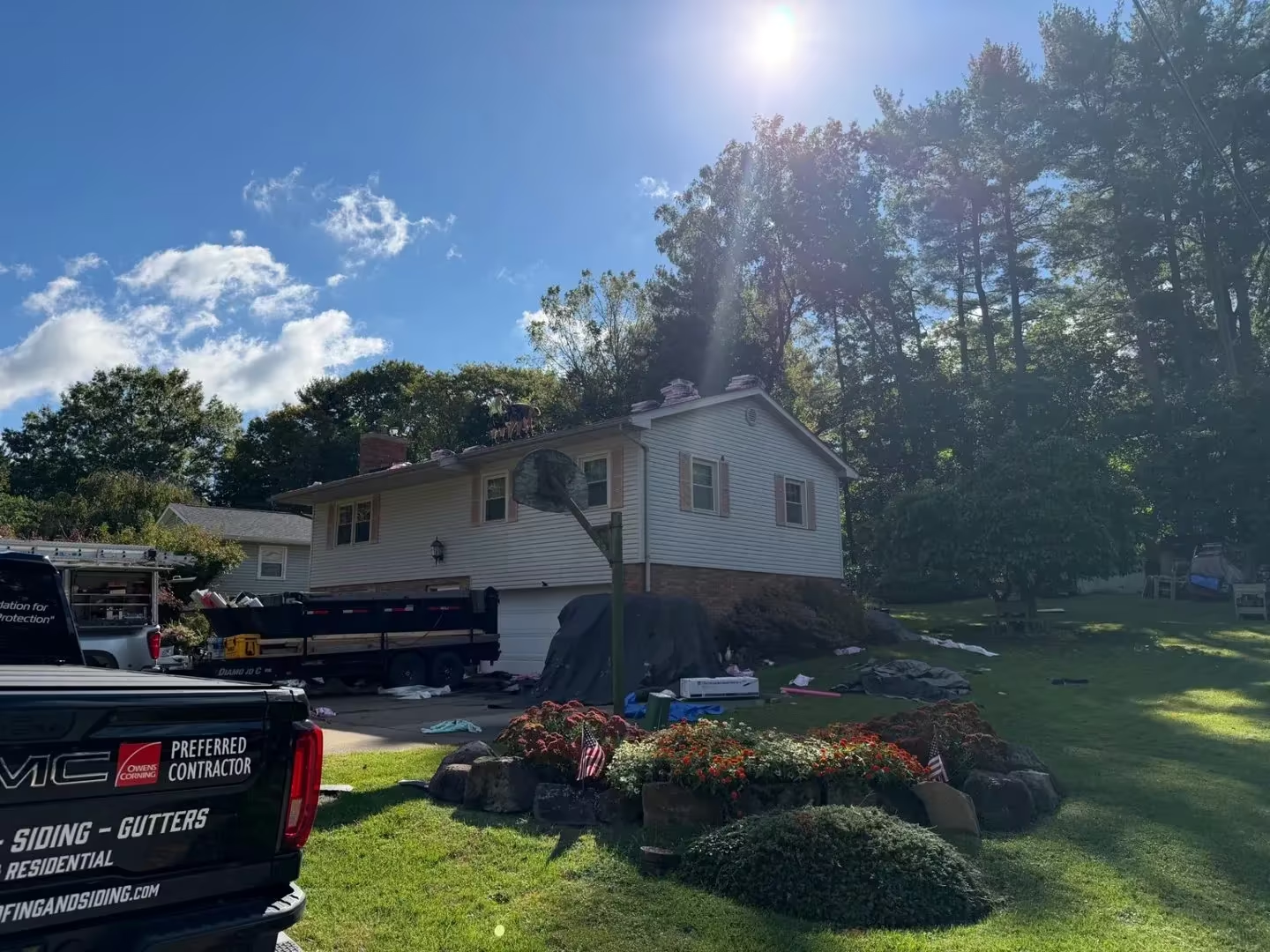
Cornerstone Roofing and Siding is an Owens Corning Preferred Contractor. You can verify our status directly through the Owens Corning contractor locator at owenscorning.com. We carry this designation because we believe manufacturer-certified installation is the right way to protect our customers' investments, not because it is a marketing advantage.
Questions to Ask Before Signing Anything
Ask every contractor these five questions. The quality and specificity of their answers will tell you a great deal about their professionalism:
1. "Can I see your current certificate of insurance and your local registration number?"
A legitimate contractor has both documents immediately available. Delays, vague responses, or "I'll get that to you later" are problems. Verify the certificate directly with the insurance carrier before work begins.
2. "Who specifically will be on my roof doing the work?"
You want to understand whether the crew is in-house or subcontracted, and whether the company's management is involved in overseeing the installation. Ask if the estimator or project manager will be present during the job.
3. "What is your workmanship warranty, and can I see it in writing?"
If the contractor cannot point to a specific clause in their contract that defines workmanship warranty coverage and duration, that warranty does not effectively exist. Get it in writing before you sign.
4. "Will you pull the required permits, and will the job be inspected?"
Many Ohio municipalities require a permit for full roof replacements. A contractor who skips permits to save time is leaving you exposed to problems at resale and voiding any inspection-backed warranty. The right answer is: "Yes, we pull permits and schedule the inspection."
5. "Can you provide three local references from jobs completed in the last twelve months?"
Recent references matter more than old ones. Roofing companies change crews, ownership, and quality standards. A reference from five years ago tells you very little about today's operation. Call the references and ask specifically about how problems were resolved, not just whether they were happy with the job.
Ready to Talk to a Contractor Who Checks Every Box?
Cornerstone Roofing and Siding is fully insured, Owens Corning Preferred certified, and has 148+ five-star Google reviews from homeowners across Wooster, Akron, and Northeast Ohio. We provide written estimates, transparent contracts, and workmanship warranties that mean something. Call us or schedule a free inspection online.
Frequently Asked Questions
Does a roofing contractor need a license in Ohio?
Ohio does not issue a single statewide roofing contractor license, but most municipalities and counties require a local contractor registration or home improvement contractor registration. Always verify that a contractor is registered in the jurisdiction where your home is located and carries the required insurance. Ask for their registration number and verify it before signing any contract.
What insurance should a roofing contractor have?
At minimum, a roofing contractor should carry general liability insurance (at least $1 million per occurrence) and workers' compensation insurance covering all employees and subcontractors working on your property. Request certificates of insurance directly from the contractor and verify that they are current. If a worker is injured on your property and the contractor lacks proper coverage, you may be held liable.
Is it illegal for a roofer to waive my deductible in Ohio?
Yes. Under Ohio Revised Code 3999.21, it is a criminal offense for a contractor to waive, absorb, rebate, or pay a homeowner's insurance deductible. A contractor offering to cover your deductible is committing insurance fraud and inflating your claim to recoup the amount. This puts both you and the contractor at legal risk. Always pay your deductible to your contractor as required by your policy.
What is an Owens Corning Preferred Contractor?
Owens Corning Preferred Contractor is a manufacturer certification that requires documented training, adherence to installation standards, maintained insurance coverage, and a proven track record of quality work. Not every contractor who installs Owens Corning products earns or maintains this designation. Preferred Contractors can offer extended workmanship warranties backed by Owens Corning, providing homeowners an additional layer of protection beyond the standard manufacturer warranty.